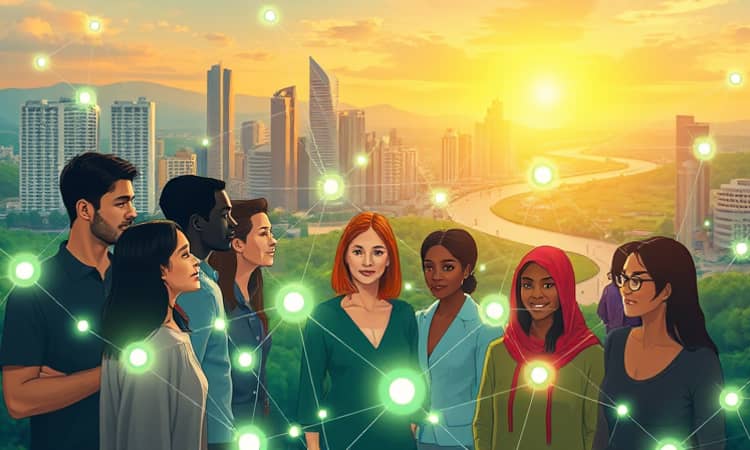
In an era where digital infrastructure underpins daily life, the influence of community-driven, decentralized networks has never been more profound. As centralized platforms face scrutiny for privacy breaches and content censorship, users are increasingly turning to peer-powered alternatives. At the core of this transformation lies a simple truth: communities that share decision-making authority, data ownership, and incentives are reshaping how we connect, create, and govern online spaces.
Understanding Decentralized Networks
Decentralized networks distribute control across multiple participants through blockchain technology or peer-to-peer protocols, eliminating single points of failure and mitigating the risks associated with central authorities. This architecture relies on distributed ledger systems where every node validates transactions, ensuring that no single entity can arbitrarily alter records or censor content.
Under this model, social graphs—the maps of relationships between individuals, groups, and organizations—reside in the hands of users rather than intermediaries. The absence of a central authority not only enhances resilience against outages and attacks but also fosters an environment where transparent governance and token incentives align stakeholder interests. Participants can propose, vote on, and implement changes collectively, embedding trust directly into the infrastructure.
The Role of Community in Shaping Governance
Communities act as grassroots governance ecosystems, or what some describe as “democracy schools,” where members learn to collaborate, deliberate, and make decisions at scale. Unlike traditional platforms that relegate users to passive consumption, decentralized networks invite every voice to participate in crafting policies, setting priorities, and allocating resources.
- Building niche, value-driven groups for specific industries or interests boosts engagement and relevance. Communities tailor their own rules and reward structures, creating spaces that reflect shared values.
- Enhancing long-term commitment by distributing responsibilities and token-based rewards deepens member investment. Contributors earn governance rights alongside financial incentives.
- Strengthening local ties through participatory projects—such as Nairobi’s urban restoration pilot—demonstrates how residents become network operators, voters, and environmental monitors in a unified system.
By embedding participants in every stage of the decision-making process, communities learn self-governance through practice rather than theory. This shift transforms users into stakeholders, fostering loyalty and proactive stewardship of the network’s health and evolution.
Benefits Amplified by Community Participation
When communities take the reins of decentralized networks, the resulting synergies unlock benefits that far exceed the sum of individual contributions. Collective action enhances system robustness, drives innovation, and creates sustainable incentive models grounded in real user engagement.
Beyond these categories, networks thrive on peer-to-peer engagement without intermediaries, rallying around shared goals and co-creating new value propositions that centralized platforms simply cannot replicate.
Real-World Case Studies Highlighting Impact
To appreciate the true potential of community empowerment, we can examine pioneering projects that blend technical innovation with collective action. These case studies reveal how decentralized models can address pressing social, environmental, and economic challenges.
- Decentralized Social Media (DeSoc): Platforms like Mastodon and emerging DeSoc frameworks allow users to host their own instances, control personal data, and influence content moderation through DAO-driven policies. Communities curate topic-specific channels, fostering healthy discourse without centralized gatekeeping.
In these ecosystems, contributors earn tokens for quality content and moderation work, reinforcing positive behaviors and enabling direct monetization of creative efforts.
- Helium Network Nairobi Pilot: In collaboration with local organizations, community members installed IoT hotspots for environmental monitoring. Hosts received IOT tokens for data relay and network maintenance, while sensors tracked air quality and noise levels. This approach cut costs, integrated citizen science, and built local expertise.
- DAO-Powered Coalitions: Research on anti-drug coalitions in Pennsylvania and Missouri revealed that groups with high information density and multiplex ties perceived greater sustainability. By tokenizing membership and voting on resource distribution, these coalitions demonstrated how network structure influences long-term viability.
- Clinical Trials in the Blockchain Era: Academic institutions like the Miller School have funded decentralized clinical studies. Here, participants maintain data control, researchers access encrypted datasets, and oversight is transparently documented on-chain, accelerating trial recruitment and enhancing patient privacy.
These initiatives exemplify how community-led governance and transparent processes can drive real-world impact across diverse sectors.
Market Trends and Statistical Insights
The decentralized social network market is on a steep growth trajectory, projected to expand from USD 18.5 billion in 2025 to an estimated USD 141.6 billion by 2035, reflecting a compound annual growth rate (CAGR) of 38.1%. The surge is fueled by increasing privacy concerns, censorship resistance needs, and the allure of token economies.
Individual users are expected to drive 62.7% of total revenue by 2025, attracted by platforms that guarantee data ownership and offer token incentives. Meanwhile, the healthcare vertical commands 39.8% of industry revenue thanks to decentralized exchanges of medical records and patient monitoring systems. IT and telecommunications follow with a 27.3% CAGR, underpinning infrastructure development and cross-chain interoperability.
Academic and governmental bodies alike are exploring decentralized governance for public services, from land registries to community funding initiatives, signaling a broadening adoption curve that extends beyond purely commercial applications.
Challenges and Strategic Considerations
Embracing decentralized networks presents both opportunities and obstacles. Communities must navigate trade-offs that include legal, technical, and social complexities to achieve sustainable growth.
- Balancing network density: While dense information and collaboration ties boost perceived sustainability, they can also foster redundancy and limit external innovation without careful management.
- Governance education: Participants need ongoing resources to understand voting mechanisms, proposal drafting, and conflict resolution, ensuring decisions reflect collective best interests.
- Regulatory uncertainty: As governments craft policies around digital assets and data sovereignty, decentralized platforms must build compliance frameworks to safeguard participants and preempt legal risks.
- Technical integration: Achieving seamless data interoperability across distinct blockchain networks demands robust standards and middleware solutions, which remain under development.
Proactive communities confront these challenges by investing in member training programs, establishing clear governance charters, and collaborating with regulators to co-design equitable policy frameworks.
Looking Ahead: Emerging Trends and Opportunities
Future decentralized networks will prioritize data ownership and privacy safeguards, integrating advanced cryptographic techniques to protect user anonymity while enabling verifiable interactions. Zero-knowledge proofs and differential privacy methods will become staples in applications ranging from social forums to supply chain tracking.
Economic incentives will evolve to emphasize long-term stakeholder well-being, with token models rewarding constructive contributions, community engagement metrics, and environmental stewardship. Businesses that partner with user-led DAOs can co-create new service offerings and unlock early mover advantages through shared governance experiments.
The healthcare sector stands poised for revolutionary change as decentralized clinical trial networks scale. Patients will retain control over sensitive health data, granting permissioned access to researchers and pharmaceutical companies under transparent, smart-contract-managed protocols.
Environmental monitoring and citizen science projects will expand upon models like the Helium Nairobi pilot, empowering communities worldwide to host sensor networks, earn rewards, and influence ecological remediation strategies through participatory governance.
As consensus mechanisms become more energy-efficient and cross-chain communication protocols mature, barriers to entry will fall, inviting broader demographic participation. Emerging tools for on-chain identity verification and reputation scoring will streamline community onboarding, ensuring trust without sacrificing privacy.
Ultimately, the evolution of decentralized networks hinges on community imagination and resilience. By combining technical innovation with inclusive governance, these ecosystems can foster equitable digital commons that reflect shared values, adapt to new challenges, and unlock collective potential on a global scale.
Empowered communities, guided by transparent processes and aligned incentives, hold the key to a future where digital infrastructure truly serves all participants. Embrace the journey, contribute your strengths, and help shape the next frontier of decentralization.