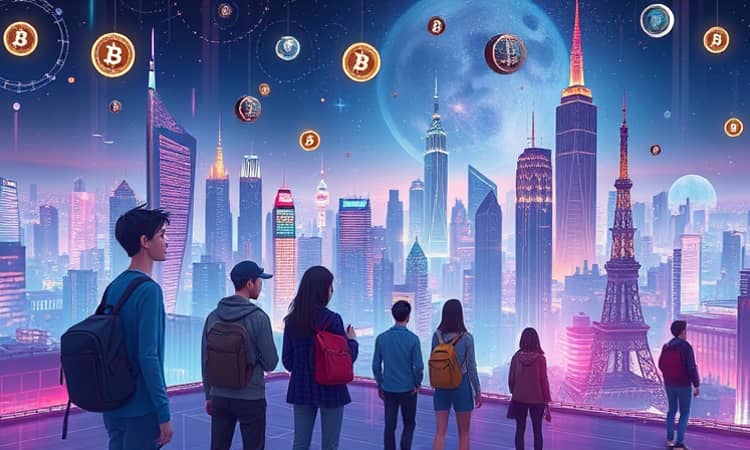
As we step into an era where the boundaries between physical and digital blur, the metaverse emerges as a transformative frontier. Combining virtual reality, augmented reality, blockchain, and AI, this shared space is reshaping how we work, play, and connect.
Understanding the Metaverse Economy
The metaverse is defined by its persistent, immersive digital universes that mirror—and extend—the real world. Users navigate these 3D environments through avatars, engaging in social activities, commerce, education, and entertainment.
At its core lies a native economy fueled by crypto, featuring digital currencies, NFTs, and tokenized assets. This virtual marketplace alleviates physical scarcity and drives new value creation—from virtual classrooms to immersive shopping malls.
Crypto: The Digital Lifeblood of Virtual Realms
Cryptocurrencies and blockchain protocols power seamless transactions and secure ownership in the metaverse. They underpin digital currencies and payment tokens that enable frictionless, cross-platform value exchange.
NFTs (Non-Fungible Tokens) grant provable ownership of unique items—art, music, virtual real estate, avatars, and wearables—while smart contracts ensure automated royalties for creators when assets are resold.
Behind the scenes, decentralized ledgers provide the rails for proof of ownership and provenance, making asset transfer between worlds reliable and transparent. Central bank digital currencies (CBDCs) may also integrate to support taxation and regulatory compliance in these virtual economies.
Key Opportunities and Asset Classes to Watch
By 2030, the metaverse market could reach over $1.3 trillion, with total addressable markets between $8–13 trillion. Savvy investors and participants should watch the following asset classes:
- Virtual Real Estate: Prime digital land for events, storefronts, and speculation in platforms like Decentraland.
- Avatars & Wearables: High-end fashion items and status symbols that confer uniqueness in social settings.
- Collectibles & Tokenized Assets: Limited-edition art, music, and memorabilia verified on-chain.
- AI-Generated Content: Personalized virtual environments and interactive experiences crafted by intelligent agents.
- IP NFTs: Licensing and royalties mechanisms for creators to monetize intellectual property directly.
Navigating Virtual Marketplaces and Commerce
Commerce in the metaverse evolves through hybrid models that combine centralized user interfaces with decentralized custody and settlement. This approach balances scalable user experiences with blockchain security.
AI-powered personalization enhances virtual shopping—users receive tailored recommendations, try on wearables in real time, and compare prices across worlds. Business models span B2C storefronts, C2C peer-to-peer trading, and B2B enterprise solutions integrating digital branding with physical product lines.
Industry Impacts and Use Cases
The metaverse is revolutionizing sectors by embedding crypto-enabled features into core activities. Below is a snapshot of transformative use cases:
Driving Technologies and Future Trends
Key enablers guiding the metaverse boom from 2026 to 2030 include advanced VR/AR hardware, 3D-capable smartphones, and full-body haptic suits. Interoperability standards will allow avatars and assets to traverse multiple worlds seamlessly.
AI continues to power both content generation and personalized user journeys, while Web3 infrastructure ensures decentralized governance, tokenized incentives, and community-driven platform development.
Challenges, Regulations, and Strategic Opportunities
Despite its promise, the metaverse faces hurdles around accessibility, data privacy, and intellectual property rights. Global regulators are racing to establish robust frameworks for virtual taxation and consumer protection.
- Accessibility: Bridging the gap for users without high-end equipment.
- Privacy & Security: Safeguarding personal data in persistent worlds.
- Regulatory Clarity: Harmonizing virtual asset definitions, tax obligations, and financial compliance.
Practical Steps to Thrive in the Metaverse Economy
Getting started in the metaverse economy demands both vision and action. Consider these strategies to position yourself for success:
- Educate Yourself: Master blockchain basics, NFT mechanics, and virtual world-building tools.
- Experiment Early: Acquire a small parcel of virtual land, mint an NFT, or host a micro-event to learn the ropes.
- Build Community: Collaborate with creators, developers, and brands to co-create experiences and share insights.
- Diversify Assets: Allocate resources across digital real estate, art tokens, and utility tokens to balance risk and reward.
- Stay Informed: Follow emerging standards, regulatory updates, and technology breakthroughs to adapt quickly.
Conclusion: Embracing a New Digital Horizon
The metaverse represents more than a technological leap—it embodies a paradigm shift in how we define work, play, and value. By harnessing crypto’s secure, decentralized infrastructure and embracing immersive experiences, individuals and businesses can unlock unprecedented opportunities.
As we build toward a future where virtual and physical realms intertwine, now is the time to learn, experiment, and innovate. Embrace the journey, and you’ll find that the metaverse is not just a destination—it’s a collaborative canvas where imagination becomes shared reality.