Each purchase we make, every product we touch, reverberates beyond our immediate surroundings. From farmland to factory floor, from shipping lanes to digital networks, our choices weave into a global web of dependencies. By exploring the forces that bind economies, societies, and ecosystems, we can cultivate mindful decisions and drive positive change.
Unraveling the Fabric of Global Interdependence
At its core, economic interconnectedness describes how personal consumption, corporate strategies, and policy decisions send ripples across borders. It embraces reciprocal relationships among producers, consumers, ecosystems, and regulators, analyzed through holistic systems frameworks.
Industrialization and the rise of specialization have led to fragmented production across borders. Over half of world manufacturing imports consist of parts and components; more than 70 percent of services imports are intermediate services. These figures reveal that few products are truly “made in one place.” Instead, they emerge from a tapestry of global contributions.
Forces Driving Economic Interconnectedness
Multiple drivers propel this integrated economy, lowering barriers and forging new ties:
- Technological advancements and containerization: Digital platforms, automation, and efficient logistics have slashed coordination costs and enabled real-time trade, empowering even small businesses to engage internationally.
- Trade liberalization: Agreements such as NAFTA and the EU Single Market have dismantled tariffs, fostering specialization and boosting cross-border flows.
- Foreign direct investment: Multinational corporations leverage cost differentials and establish intricate supply chains—consider how smartphone components travel through several countries before assembly.
- Financial liberalization: Cross-border lending and portfolio investments have expanded, while institutions like the IMF support balance-of-payments stability.
- Infrastructure modernization: Advances in air transport, ports, and digital connectivity have knitted distant regions into global value chains.
The Rise of Global Value Chains
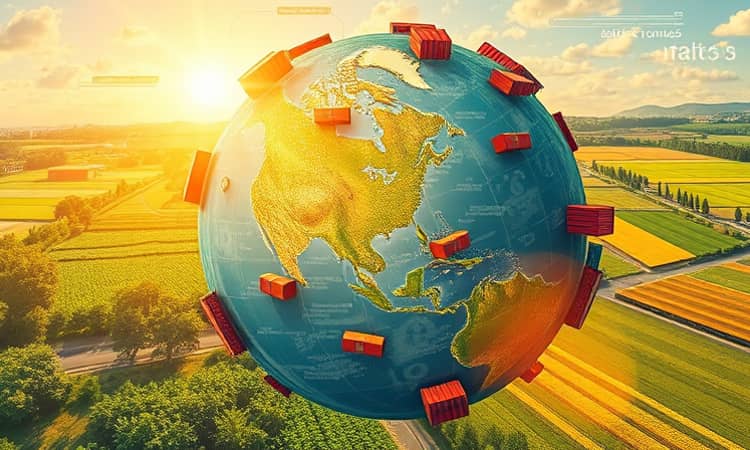
Global value chains (GVCs) fragment production into specialized tasks dispersed across nations. This approach leverages comparative advantage and drives efficiency, scale, and scope. In practice, a single garment or electronic device may source raw materials in one region, undergo processing in another, and reach final assembly elsewhere.
Input-output analysis tracks these intricate linkages, uncovering mutually reinforcing supply chains that boost productivity but also concentrate risk. A disruption in one node—whether a factory shutdown or a trade dispute—can trigger a cascade of effects worldwide.
Harvesting Benefits and Opportunities
Interconnected economies offer powerful advantages when managed responsibly:
- Economic growth: Access to larger markets fuels job creation and higher living standards for both developing and developed nations.
- Innovation diffusion: Knowledge spillovers from FDI and collaboration drive new technologies and best practices.
- Consumer choice and affordability: Competition delivers diverse products at competitive prices.
- Equity potential: Participation in GVCs can diversify skills, expand education exchanges, and foster research partnerships.
- Sustainability shifts: Fair-trade, local sourcing, and circular economy principles cut waste, reduce emissions, and advance sustainability and equitable growth.
Confronting Challenges and Risks
However, deep interdependence brings vulnerabilities that demand vigilant management:
- Shock amplification: Dependence on distant suppliers can magnify disruptions, from natural disasters to geopolitical tensions.
- Inequality and displacement: Rapid shifts in production can leave communities behind, as seen in regions hit by plant relocations.
- Environmental externalities: Unpriced impacts like deforestation, mining pollution, and carbon emissions often burden third-party ecosystems.
- Trade conflicts and arbitrage: Imbalances spark disputes, while inconsistent regulations enable regulatory arbitrage.
By recognizing these pitfalls, stakeholders can deploy supply chain risk management and resilience planning to anticipate and absorb shocks without halting commerce.
Stories from the Ground
Real lives and livelihoods underscore the stakes of interconnected economies. Consider the quintessential global product: the smartphone. Its rare minerals are mined in one region, microchips fabricated in another, and final assembly in a third. This chain of custody engages millions of workers, from artisanal miners to high-tech engineers, linking remote communities to global markets.
During the COVID-19 pandemic, goods trade often offset service-sector losses. While travel and hospitality stalled, critical medical supplies, packaging materials, and basic consumer goods flowed through alternative routes, demonstrating both the resilience and flexibility of GVCs.
Meanwhile, emerging alliances among Brazil, Russia, India, China, and South Africa (BRICS) highlight how developing nations leverage shared interests to diversify supply sources, access new technologies, and pursue more inclusive trade models.
Building a Sustainable and Inclusive Future
Charting a course forward requires integrated action at all levels:
Firms must adopt multi-stakeholder approaches, engaging suppliers, communities, and regulators in risk management. Policymakers can harmonize standards for labor, environment, and safety, reducing regulatory friction while safeguarding rights.
Investing in green infrastructure and lifecycle metrics from industrial ecology helps to internalize external costs, guiding supply chains toward renewable energy, waste reduction, and circular design.
Academic and research institutions can apply interdisciplinary tools—such as planetary boundaries and complex adaptive systems modeling—to anticipate tipping points and steer the global grind toward a safe operating space.
Conclusion: Empowered Choices in a Connected World
Every purchase, investment, and policy vote is a thread in the tapestry of interconnected economies. By choosing ethical brands, supporting local producers, and demanding transparency, individuals can reshape supply chains for the better.
Embracing our collective power, we can foster an economic ecosystem that balances prosperity with equity and ecological resilience. The global grind may feel vast, but informed decisions and collaborative innovation ensure that every link in the chain uplifts communities, preserves our planet, and secures a thriving future for all.