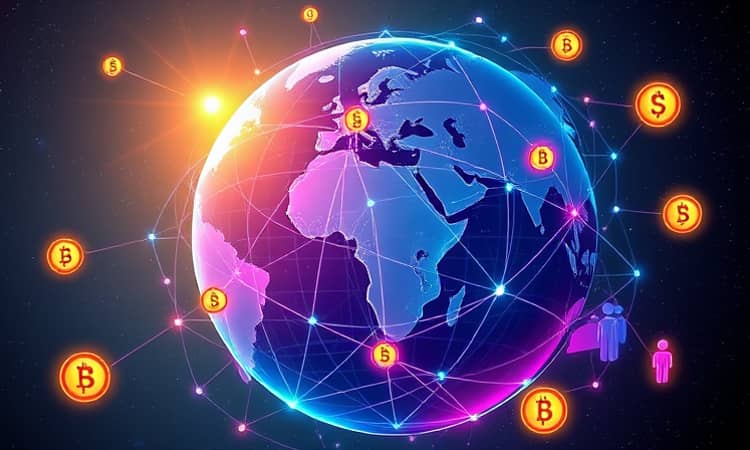
In an era defined by digital transformation, finance is undergoing a seismic shift. Decentralized finance—or DeFi—is emerging as a powerful alternative to traditional banking, offering individuals unprecedented autonomy over their assets. By removing middlemen, DeFi promises direct access to lending, borrowing, and investment opportunities that were once the exclusive domain of large institutions. This movement carries the transformative potential of DeFi to reshape global economies and empower users worldwide.
Understanding the DeFi Landscape
DeFi comprises blockchain-based protocols and applications aiming to replicate conventional financial services in a decentralized manner. At its core are smart contracts—self-executing agreements that automate transactions without human intervention—and decentralized applications (DApps) that interface seamlessly with users. Transactions occur on public ledgers, ensuring immutable records and boosted transparency. Unlike legacy systems, DeFi fosters permissionless, transparent financial platforms where anyone with internet access can participate.
By eliminating centralized intermediaries, DeFi drastically reduces operational costs and settlement times. Users can supply liquidity to decentralized exchanges (DEXs), earn yield through liquidity mining, or access flash loans for rapid capital deployment. This open architecture supports innovation, enabling developers to build new protocols atop existing networks and continuously refine the ecosystem’s capabilities.
Market Size and Growth Projections
Analysts forecast the global DeFi market to expand at double-digit CAGRs, surging from tens of billions today to nearly a trillion dollars within a decade. Differences in base years and scope yield varying estimates, yet all agree on a rapid trajectory. Such growth is underpinned by growing institutional interest, real-world asset tokenization, and expanding use cases that stretch beyond simple trading and lending into insurance, derivatives, and cross-border payments.
Regionally, North America commands the largest revenue share as projects like Compound and Uniswap anchor the ecosystem. Simultaneously, the Asia Pacific region leads in growth rate, fueled by a burgeoning crypto-savvy population and accelerating digital infrastructure investment.
Beyond raw numbers, these forecasts signal a profound shift in capital allocation. As DeFi matures, we anticipate a convergence with traditional finance, where tokenized bonds, stocks, and real estate unlock vast pools of liquidity.
Key Trends Driving DeFi Growth
Several transformative trends are driving DeFi’s explosive growth as we approach 2026. Technological innovation, user adoption, and regulatory adaptation form an interrelated cycle that continually elevates the ecosystem. Each development addresses a critical pain point—whether it be improving scalability, enhancing security, or broadening participation to previously underserved communities.
- Expansion of decentralized exchanges (DEXs) with advanced AMMs
- Integration of real-world assets (RWA) through tokenization
- Surge in yield farming and liquidity mining programs
- Growth of institutional DeFi platforms and regulated protocols
- Emergence of NFT-based financial instruments
Collectively, these trends create a borderless, interoperable financial ecosystem that blurs the line between traditional and digital markets, fostering interoperability and continuous innovation.
Navigating Regulatory and Risk Challenges
Regulatory clarity is paramount for sustainable DeFi expansion. In the United States, lawmakers are drafting stablecoin legislation to address transparency, reserve requirements, and consumer protection. Meanwhile, the CFTC and SEC are exploring safe harbor frameworks that might shield compliant DeFi protocols from ambiguous enforcement actions. Such developments could usher in secure, compliant operational frameworks for decentralized platforms.
However, risks persist. Smart contract exploits and governance attacks remain real threats, while illicit finance concerns pose obstacles to widespread adoption. Experts advocate extending anti-money laundering (AML) and know-your-customer (KYC) standards to non-custodial platforms, aiming to close loopholes without stifling innovation. Achieving the right regulatory balance will determine DeFi’s long-term viability.
Practical Strategies for Engaging with DeFi
For individuals eager to harness DeFi’s opportunities, a methodical approach is essential. Rapid innovation can be exhilarating, but it also heightens exposure to unforeseen vulnerabilities. By adopting disciplined practices, users can capitalize on yields while mitigating risks inherent in this evolving landscape.
- Begin with modest allocations in established protocols
- Employ hardware wallets and multi-signature security setups
- Review independent smart contract audits before committing funds
- Monitor regulatory developments in your jurisdiction closely
- Participate in community governance and protocol voting
These steps lay the groundwork for responsible engagement, enabling you to leverage DeFi’s unprecedented financial inclusion for all safely and effectively.
The Road Ahead
Looking forward, the interplay between DeFi and TradFi promises novel hybrid solutions. Centralized players may offer on-ramps to decentralized protocols, while DeFi innovations could inform improvements in clearing, settlement, and custodial services. Cross-chain bridges and layer-two scaling solutions will continue to enhance throughput, driving down fees and opening up Real-Time Finance (RTF) use cases.
Emerging areas such as decentralized identity, privacy-preserving transactions, and decentralized insurance highlight the ecosystem’s boundless potential. As governance models evolve, token holders will wield more meaningful influence, shaping protocol upgrades and risk parameters in a truly democratic fashion.
Embracing DeFi’s possibilities demands an open mind, a commitment to continual learning, and a focus on security. By doing so, you position yourself at the forefront of a financial revolution—a movement defined by streamlined, efficient, and resilient transactions and the democratization of capital flow. The future of finance is decentralized, interconnected, and inclusive. Will you be part of it?