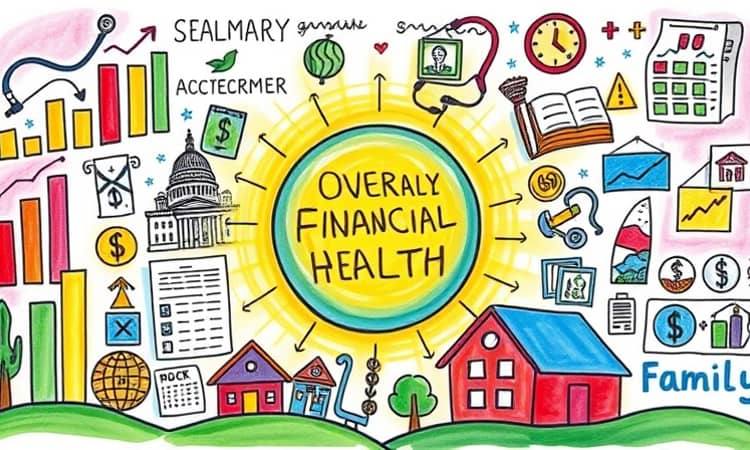
In today’s interconnected economy, understanding and tracking financial health metrics is more important than ever. Whether you manage personal finances, oversee a business, guide a nonprofit, direct a hospital, or govern public resources, a clear grasp of key indicators can empower informed decision making across contexts.
This article explores the essential benchmarks, formulas, and best practices for assessing stability, spotting trends, and driving strategic growth.
Understanding Financial Health Metrics
Financial metrics function much like vital signs for an individual’s body: they signal strengths, weaknesses, and emerging risks. By adopting a holistic view of financial stability, you ensure no single ratio or trend goes unnoticed.
Common categories include profitability, liquidity, leverage, efficiency, and solvency. Each offers unique insights, but their true power emerges when considered collectively. Tracking these metrics consistently over time reveals patterns, highlights opportunities for improvement, and helps you forecast future challenges and opportunities.
Personal Finance Staples
Building personal wealth and resilience begins with mastering a few foundational numbers. By focusing on these core metrics, you lay the groundwork for lifelong security and long-term financial freedom.
- Net Worth: Track all assets (savings, investments, property) minus liabilities (mortgages, loans). Review quarterly to gauge progress.
- Debt-to-Income (DTI) Ratio: Calculate total monthly debt payments divided by net income. Aim for under 36% to maintain borrowing power.
- Savings Rate: Divide monthly savings by total income to pinpoint how much you reinvest in your future.
- Emergency Fund (Days Cash on Hand): Maintain at least 25 times annual expenses in liquid reserves to weather unexpected events.
Consistent tracking helps you spot where adjustments are needed—whether cutting discretionary spending, accelerating debt payments, or increasing savings contributions.
Business and Organizational Indicators
For enterprises of all sizes, a balanced dashboard of metrics drives operational excellence and sustainable growth. Focus on five categories:
- Profitability: Gross margin, net profit margin, return on equity. Declining margins signal rising costs or pricing pressure.
- Liquidity: Current ratio (current assets ÷ current liabilities), quick ratio, operating cash flow. Ensures you can meet short-term obligations.
- Efficiency: Inventory turnover, accounts receivable days, payroll cost ratio. Highlights bottlenecks and resource allocation.
- Leverage: Debt-to-equity ratio, debt service coverage ratio (DSCR). Balances growth investment with risk management.
- Valuation: Price-to-earnings ratio, earnings per share. Essential for investor communication and strategic planning.
Leaders who leverage data-driven insights can optimize operations, refine pricing strategies, and secure financing on favorable terms.
Healthcare and Nonprofit Measures
In mission-driven sectors, financial health metrics underpin the ability to serve communities effectively. Healthcare providers and nonprofits require specialized benchmarks to maintain quality and access.
Key healthcare metrics include:
- Net Patient Revenue (NPR): Measures billed revenue after discounts and allowances.
- Operating Margin: Reflects profit left after covering all expenses (average U.S. hospital margin ~1.4%).
- Days Cash on Hand: Target ~150 days to secure operations during revenue fluctuations.
- AR Days (Accounts Receivable): Tracks billing efficiency and payer mix impact.
Nonprofit organizations should monitor:
Revenue Reliability: Percentage of recurring unrestricted income.
Liquidity Coverage: Months of operating expenses funded by reserves or liquid assets.
Debt Management: Liabilities as a share of total assets—to prevent overextension.
Government and Public Sector Benchmarks
Public entities rely on rigorous indicators to maintain fiscal health and transparency. Many states adopt a suite of ratios akin to medical vitals, including fund balance ratios, pension liabilities, and revenue diversification metrics.
Key considerations include:
- Collective View: No single ratio dictates health—watch trends across multiple indicators.
- Early Warning Signals: Declining fund balances or rising debt service ratios signal emergent stress.
- Benchmarking: Compare against peer municipalities and GAAP guidelines for context.
Building a Comprehensive Financial View
True financial resilience emerges when you weave together insights from personal, business, healthcare, nonprofit, and public sector metrics. Each lens illuminates different facets of stability, cash flow, and long-term viability.
Here are practical steps to implement an integrated monitoring system:
1. Inventory all relevant metrics across contexts. 2. Establish a regular reporting cadence—monthly for cash flow ratios, quarterly for net worth, and annually for strategic ratios. 3. Set benchmarks based on industry data, historical performance, and aspirational targets. 4. Use dashboards or automated tools to visualize trends and flag anomalies.
By embracing a discipline of continuous measurement, you transform raw numbers into actionable strategies. Over time, this approach fosters confident risk management, optimal resource allocation, and steady progress toward your goals.
Remember that metrics are not just numbers in a spreadsheet—they tell the story of your financial journey. When you pay attention to these signals, adjust course proactively, and celebrate milestones, you become the architect of lasting financial health.