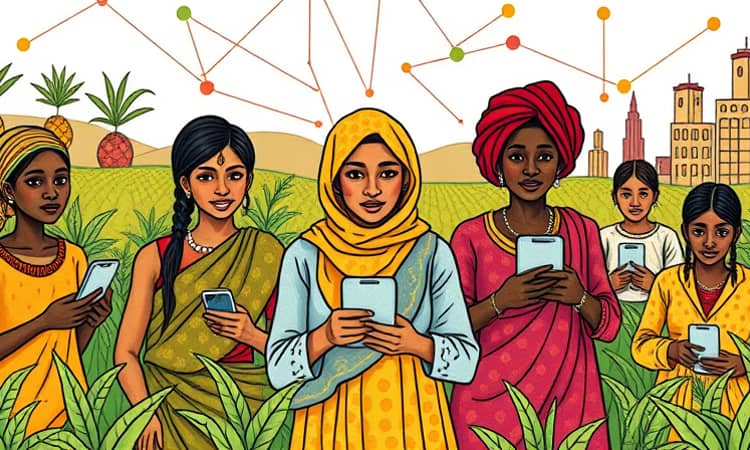
In recent years, the world has witnessed historic highs in account ownership, with global access reaching nearly 80 percent. Yet, despite these strides, more than 1.3 billion adults remain unbanked and 300 million hold inactive accounts. This paradox highlights both progress and persistent barriers.
The journey toward comprehensive financial inclusion now centers on ensuring that underserved groups—small business owners, rural women, smallholder farmers, and residents of fragile economies—gain meaningful access to credit. Without practical pathways to loans, these communities risk being left behind as the digital economy advances.
Current Landscape of Financial Inclusion
According to the Global Findex 2025 report, account ownership stands at 79 percent for adults globally and 75 percent in low- and middle-income countries. Over the past decade, the gender gap in developing economies has shrunk from nine percentage points to five.
Formal savings rates remain below 40 percent in many LMICs, yet digital merchant payments and mobile accounts are surging. These resilience drivers via digital platforms underscore the potential for mobile banking to reach the most remote areas.
Barriers to Loan Accessibility
While account ownership improves, loan access remains uneven. Borrowers with credit scores above 700 enjoy approval rates around 55 percent, whereas those scoring below 660 see approvals drop to 20 percent—often only when offset by strong revenue or business tenure.
Small enterprises reporting under $500,000 in annual revenue face approval rates near 22 percent. Nearly a quarter of new borrowers operate businesses younger than four years, further limiting their chances for financing.
Industry biases persist, favoring construction, restaurants, and healthcare, while other sectors struggle to secure working capital. Short-term loans dominate, with only 75 percent of requested amounts funded on average.
Innovative Solutions to Bridge the Gap
To reach the next billion unbanked adults, stakeholders must adopt hybrid funding and delivery models that combine public, private, and nonprofit efforts. As traditional donor funding declines, mission-driven startups, university research centers, and corporate R&D labs are stepping in.
Digital lenders leveraging alternative data—such as mobile transaction history and community peer reviews—have demonstrated the ability to underwrite credit for women in rural areas and smallholder farmers.
Community-centric approaches, including savings groups linked to digital wallets, provide a foundational financial habit that evolves into loan readiness. These groups foster trust, build credit history, and demonstrate repayment capacity.
2026 Lending Trends and Outlook
The Federal Reserve’s January 2026 Senior Loan Officer Opinion Survey revealed tighter commercial and industrial lending standards across all firm sizes. However, demand for C&I and commercial real estate loans has strengthened, while consumer demand for real estate, auto, and personal loans weakened.
Looking ahead, lenders expect standards to remain stable, with continued growth in business loan demand and potential deterioration in loan quality for small firms and nonprime consumer segments.
Personal loan originations surged by 60 percent, and mortgage originations rose by 11.6 percent in late 2025. Yet, a K-shaped recovery suggests that households and firms with limited collateral or low credit scores may face increased challenges.
Actionable Steps for Stakeholders
Bridging the financial gap requires coordinated action from governments, financial institutions, and communities. The following steps offer a roadmap:
- Enhance digital literacy programs to ensure inclusive access to mobile platforms.
- Incorporate alternative data sources for credit scoring and risk assessment.
- Develop targeted loan products for early-stage enterprises and low-income clients.
- Strengthen public–private partnerships to sustain capacity-building efforts.
- Monitor and adjust regulatory frameworks to support innovation while protecting consumers.
Building a Resilient Financial Ecosystem
As donor contributions from USAID, bilateral agencies, and private foundations wane, the ecosystem must evolve. Embedded finance solutions—where banks partner with retailers, telecoms, and NGOs—can maintain outreach at the last mile.
Corporate social responsibility initiatives, when aligned with market incentives, foster scalable lending platforms. By embedding credit services into existing community networks—agricultural cooperatives, trade associations, and women’s groups—lenders can reduce outreach costs and build trust.
Inspiring Stories of Change
Across Sub-Saharan Africa, smallholder farmers in agricultural cooperatives have used group-saving wallets to unlock microloans for seeds and equipment. In Southeast Asia, rural women entrepreneurs access digital platforms to finance small retail ventures, achieving revenue growth of over 30 percent annually.
In Latin America, community banks are piloting AI-driven credit models that analyze mobile payment histories, enabling loan approvals in under 24 hours. These pilots demonstrate data-driven underwriting breakthroughs that traditional metrics overlook.
Conclusion: A Call to Action
The pursuit of comprehensive loan accessibility is both a moral imperative and an economic opportunity. By leveraging digital innovation, alternative data, and collaborative funding models, we can ensure that the next billion unbanked adults step confidently into the financial mainstream.
Stakeholders must embrace a shared vision: one where small businesses, rural entrepreneurs, and marginalized communities access the capital they need to thrive. In doing so, we not only narrow the financial gap but also unlock new pathways to resilience, growth, and shared prosperity.