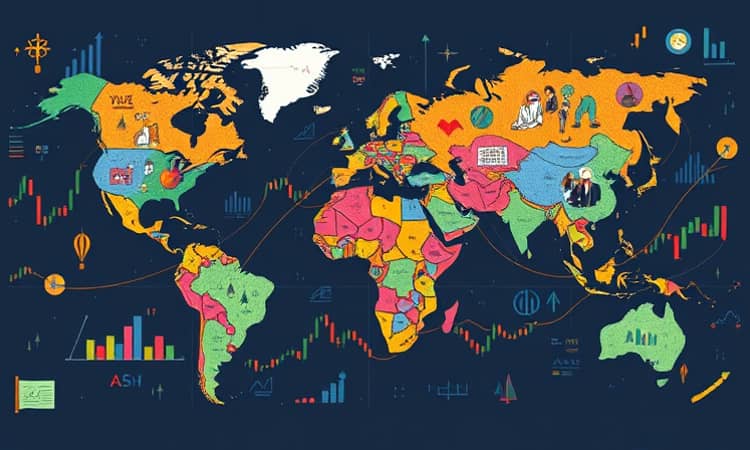
As you plan your portfolio for 2026, understanding the forces driving global markets is essential. This comprehensive analysis unpacks forecasts, regional trends, and risk factors to help you make informed decisions.
Global Growth Projections for 2026
Leading institutions forecast moderate expansion next year. While growth will continue, it remains below pre-pandemic growth averages, reflecting ongoing challenges in many economies.
- IMF: 3.3% projected global growth
- OPEC: 3.1% forecast for world economy
- Goldman Sachs: anticipates 2.8% GDP increase
- UN DESA: expects 2.7% global expansion
- ACCA: sees growth just above 3%
These estimates illustrate a landscape of steady yet modest growth rates, underpinned by policy support but constrained by lingering headwinds.
Regional Economic Performance
Growth prospects vary significantly by region, shaping investment opportunities and risks.
This regional breakdown highlights where growth is powering ahead and where caution remains prudent.
Key Economic Factors Influencing Investments
Several variables collectively shape market dynamics and investor sentiment.
- Interest Rate Dynamics: High rates raise borrowing costs and temper spending, while cuts can spur activity.
- Inflation Trends: Persistent, variable inflation undermines purchasing power and complicates planning.
- Business Confidence: The animal spirits concept reminds us that sentiment can override fundamentals.
- Fiscal and Monetary Policy: Stimulus measures and central bank actions directly affect liquidity and returns.
- Geopolitical Uncertainty: Trade tensions and conflicts pose significant downside threats.
By monitoring these elements, investors can better anticipate shifts and adjust strategies accordingly.
Growth Support Mechanisms
Despite challenges, several catalysts are bolstering global expansion and offering investment avenues:
- Easier monetary policy and financial conditions
- Targeted fiscal stimulus in the U.S., Germany, and Spain
- rapid artificial intelligence investment boom energizing technology sectors
- Resilient consumer spending trends
- Public infrastructure investment, notably in South Asia
These drivers create pockets of opportunity in equities, infrastructure projects, and technology ventures.
Economic Vulnerabilities and Downside Risks
Investors must remain vigilant to emerging threats that could derail progress. Key vulnerabilities include:
1. subdued investment and limited fiscal space in several major economies.
2. Rising public debt and potential funding gaps.
3. Heightened geopolitical tension and uncertainty.
4. Trade policy escalation that could disrupt supply chains.
5. Property market corrections, particularly in China.
6. Climate-related shocks and debt burdens in Africa.
Sectoral Dynamics
Different industries respond uniquely to the global environment:
China’s strategy of consolidating overcapacity in steel, cement, and solar panels aims to streamline efficiency, but the persisting property downturn threatens growth prospects. Domestic consumption is increasingly pivotal, shaping investment flows into consumer goods and services.
In Mexico, manufacturing and construction are poised for nearshoring gains as companies relocate supply chains closer to U.S. markets. Infrastructure and technology upgrades in the region offer compelling long-term potential for strategic investors.
Charting a Path Forward for Investors
Given the landscape, consider these practical steps:
- Diversify across regions to balance high-growth markets like India with stable economies such as the U.S. and Eurozone.
- Allocate to sectors benefiting from structural trends, including AI, green energy, and infrastructure.
- Maintain a portion of your portfolio in fixed income to hedge against volatility and rising rates.
- Monitor central bank communications and fiscal policy announcements for inflection points.
- Stay attuned to geopolitical developments and be prepared to adjust allocations swiftly.
By combining vigilance with strategic positioning, you can navigate risks and capitalize on growth prospects. The global economy in 2026 may grow modestly, but it remains rich with opportunities for informed investors willing to analyze data, embrace innovation, and remain agile.
Your investment decisions will be shaped by these interconnected forces—understand them, and you can steer your portfolio toward resilience and long-term gains.